
Few foods express the character of French cuisine quite like cheese. From the soft, creamy cheeses of Normandy to the firm mountain varieties of the Alps, each reflects a particular landscape, history and approach to food.
A French cheeseboard, or plateau de fromages, is more than a selection of cheeses arranged together. It represents regional traditions, craftsmanship and the pleasure of taking time over a meal.
In France, cheese has traditionally been enjoyed as a course in its own right, often between the main dish and dessert. Understanding the different varieties, how they are served and the customs surrounding them offers a fascinating introduction to French dining culture.
What Makes a Traditional French Cheeseboard?
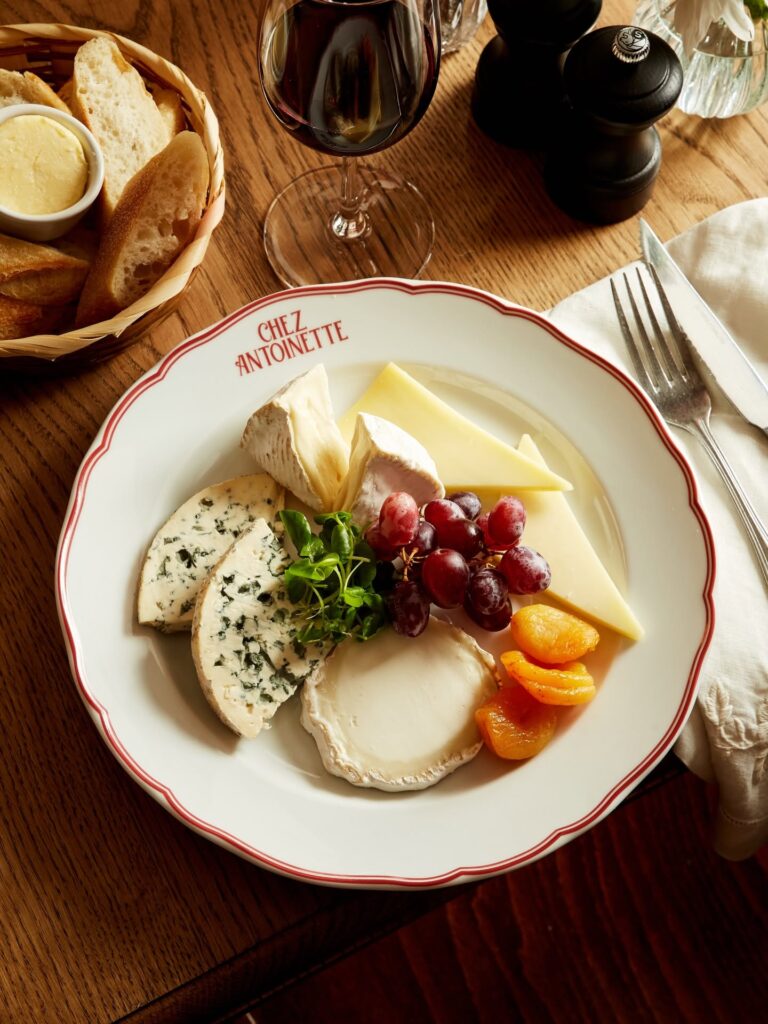
A traditional French cheeseboard brings together cheeses with different textures, flavours and origins.
Rather than choosing several similar varieties, the idea is to create a selection that offers contrast. A soft cheese might sit alongside a firm, aged variety, while a blue cheese introduces a stronger, more distinctive flavour.
The selection does not need to be extensive. Three or four thoughtfully chosen cheeses can offer plenty of variety, particularly when they represent different styles or regions.
Bread is a familiar accompaniment, allowing the flavours of the cheese to remain central to the experience.
Above all, a French cheeseboard is intended to be enjoyed slowly, with an appreciation for the individual character of each cheese.
Why Cheese Holds Such an Important Place in French Culture
France’s cheesemaking traditions are closely connected to its agricultural history.
Different landscapes, climates and farming practices have shaped the cheeses produced across the country. Mountain regions developed firm varieties suited to ageing, while areas with a strong dairy-farming heritage became associated with softer cheeses.
Many traditional varieties remain closely linked to their place of origin.
Some carry the Appellation d’Origine Protégée (AOP) designation, which protects products made according to defined geographical and production requirements.
This connection between food and place is an important part of French culinary identity. Cheese is not simply an ingredient, but a way of preserving regional knowledge and techniques passed down through generations.
Exploring France's Different Cheese Traditions
The variety of French cheese can seem overwhelming at first, but understanding a few familiar styles makes it easier to appreciate the differences.
Soft Cheeses From Normandy and Beyond
Normandy is particularly associated with rich dairy products and soft cheeses.
Camembert de Normandie is among its most recognisable examples, known for its bloomy white rind and creamy texture as it matures.
Brie is another familiar soft cheese, traditionally associated with the historic Brie region east of Paris.
Although the two share certain characteristics, their flavour, texture and production traditions differ.
Firm Cheeses From the Mountains
Mountain cheesemaking developed partly around the need to preserve milk over longer periods.
Comté, produced in the Jura region, is a well-known example. Its firm texture and complex flavour develop through ageing, with characteristics that can range from buttery and nutty to more pronounced savoury notes.
Beaufort, associated with the French Alps, offers another example of how geography and traditional farming practices influence a cheese's identity.
These varieties bring a different texture and depth of flavour to a cheeseboard.
Blue Cheeses With Distinctive Character
French blue cheeses introduce stronger flavours and striking appearances.
Roquefort, traditionally produced from sheep's milk, is known for its blue veining and distinctive salty, tangy character.
Its production is closely associated with the natural caves of Roquefort-sur-Soulzon in southern France.
Blue cheeses are often included in smaller portions because of their pronounced flavour, providing contrast with milder varieties.
The Diversity of French Goat's Cheese
Goat's cheese, known as fromage de chèvre, is particularly associated with several regions of central and southern France.
Its character varies considerably depending on production and maturity.
Fresh examples can be delicate and tangy, while aged varieties develop firmer textures and more concentrated flavours.
Including goat's cheese can introduce another dimension to a selection, particularly alongside cow's and sheep's milk cheeses.
When Is Cheese Traditionally Served in a French Meal?
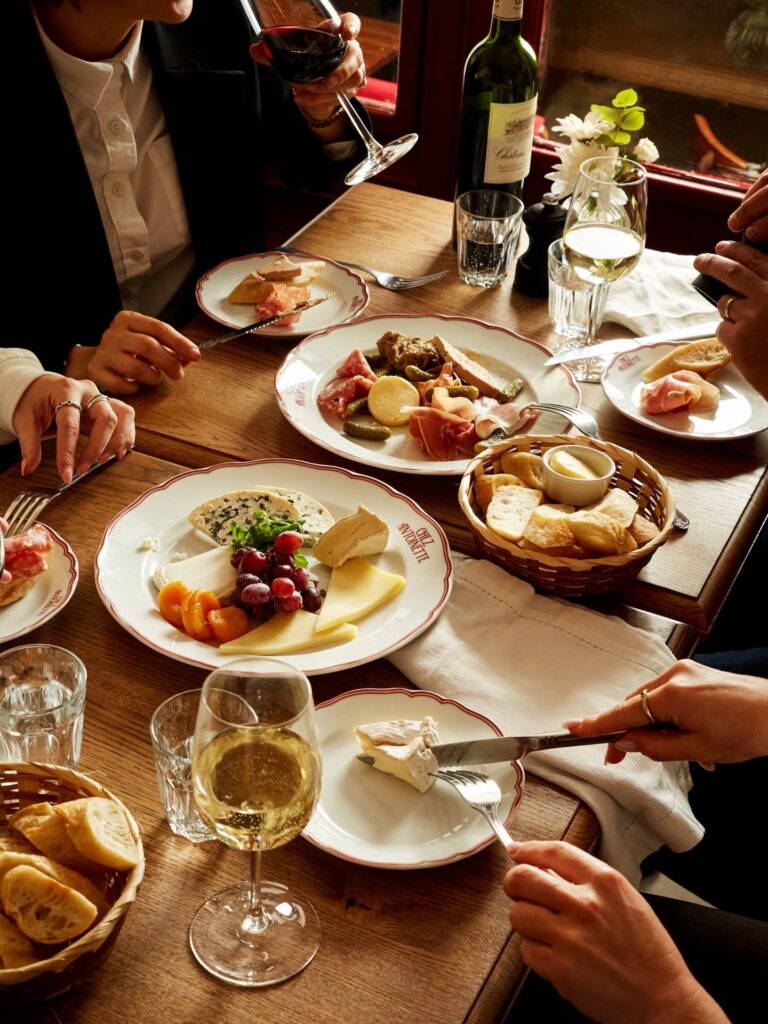
One of the distinctive features of traditional French dining is the place cheese occupies within the meal.
Rather than being reserved exclusively for the beginning or served as a casual snack, cheese has often appeared after the main course and before dessert.
This creates a natural transition between savoury dishes and something sweet.
The custom reflects a wider appreciation for the rhythm of dining, where different courses are given their own place and attention.
Of course, contemporary French eating habits vary. Cheese may be enjoyed at lunch, as part of a lighter meal or shared informally with friends.
The important tradition is less about following a strict sequence and more about appreciating cheese as something worth enjoying in its own right.
How to Arrange and Serve a French Cheeseboard
Creating a cheeseboard at home does not require specialist equipment or an elaborate presentation.
A few simple considerations can help bring out the character of the cheeses.
Choose Variety Rather Than Quantity
Begin with three or four cheeses that offer different textures and strengths.
For example, a soft bloomy-rind cheese, a firm aged variety and a blue cheese create a balanced introduction to several French traditions.
A goat's cheese can add another contrast if you would like a broader selection.
Allow the Cheese to Reach a Suitable Serving Temperature
Many cheeses reveal more of their aroma and texture when they are not served directly from the refrigerator.
The time required depends on the variety, room conditions and food-safety guidance, so avoid leaving perishable cheeses unrefrigerated for extended periods.
A little attention to temperature can make a noticeable difference to the tasting experience.
Serve With Simple Accompaniments
Good bread is often all that is needed.
A plain baguette or another relatively neutral bread allows the individual cheeses to remain the focus.
Fruit, nuts or preserves can also be enjoyed alongside cheese, although they need not appear with every selection.
Taste From Mild to Strong
When enjoying several cheeses, beginning with the mildest varieties allows their more delicate flavours to be appreciated before moving towards stronger examples.
A creamy soft cheese might therefore come before an aged mountain cheese, with a particularly assertive blue cheese towards the end.
This is a helpful approach rather than a rigid rule.
Understanding the Art of Cheese and Wine Pairing
Cheese and wine are closely associated with French dining, but pairing them successfully involves more than choosing a red wine for every occasion.
The saltiness, richness and intensity of a cheese all influence how it interacts with a wine.
Fresh goat’s cheeses, for example, are often paired with crisp white wines, while some aged hard cheeses work well with fuller-bodied whites.
Blue cheeses can be particularly interesting alongside sweeter wines, where contrasting flavours create a different balance.
Regional traditions also offer useful inspiration. Wines and cheeses from the same area have often developed alongside one another, although regional origin alone does not guarantee a successful pairing.
There is no single correct combination. Personal preference remains an important part of the experience, and cheese can be enjoyed just as thoughtfully without wine.
French Cheese at Chez Antoinette
At Chez Antoinette, French cheese is part of the dining experience, reflecting the traditions explored throughout this guide.
Our Victoria restaurant offers an Assiette de Fromages Français, a selection of three French cheeses accompanied by seasonal chutney, walnuts and sourdough baguette, as described in our main menu.
At our Covent Garden restaurant, the all-day dining menu features a cheese plate available in small or large sizes with a selection of two or four French cheeses, grapes, chutney and bread. Other cheese-led dishes and sharing options also form part of the menu.
These selections offer an opportunity to enjoy French cheese within a meal, whether as something to share or as a course in its own right. Individual varieties and availability may change, so it is worth checking the current menu when planning a visit.
French Cheese and the Pleasure of Sharing a Meal
Our appreciation for French food and hospitality is closely connected to the origins of Chez Antoinette.
Founder Aurélia Delclos-Noël drew inspiration from the food and hospitality she experienced at her grandmother Antoinette’s table in Lyon, where meals were occasions for conversation and spending time together.
That family influence continues to shape our approach to dining.
Cheese has a natural place within this tradition. Whether enjoyed towards the end of a meal or shared around the table, it encourages a slower, more conversational approach to eating.
It is also a reminder that French cuisine is not defined only by elaborate dishes. Some of its most enduring pleasures come from simple ingredients, regional craftsmanship and the time taken to appreciate them.
Discover the Traditions Behind French Dining
The French cheeseboard offers a small but revealing insight into the country’s culinary heritage.
Behind every variety lies a combination of landscape, local knowledge and cheesemaking traditions. From the soft cheeses of Normandy to the aged varieties of the mountains, each brings something different to the table.
Perhaps the most enduring part of the tradition is the simple pleasure of taking time to enjoy good food in good company.
If you would like to explore more of these flavours, we would be delighted to welcome you to Chez Antoinette. You can book a table and enjoy a little French hospitality during your next visit.